


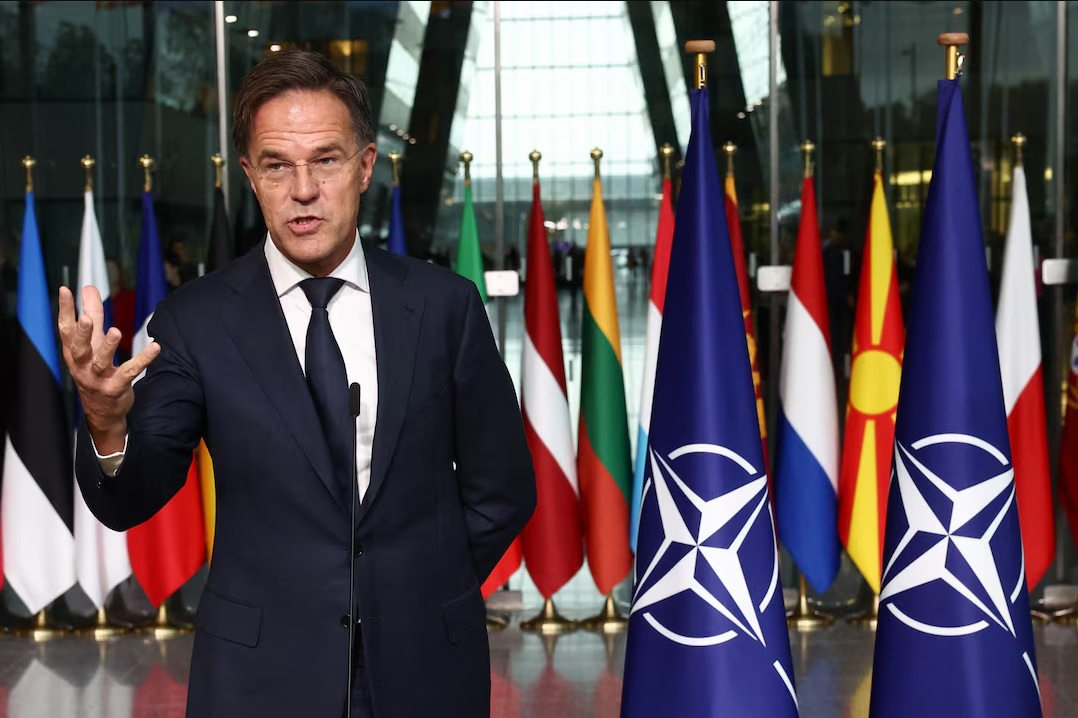
 Photo: Reuters
Rutte in NATO: A Puppet of the New World Order or Just Dangerously Naive?
29 июня 2026 в 11:50 6450Moscow - Veterans news. Is Mark Rutte a puppet of a new world order, or is he simply another European top politician who has stopped thinking for himself? The question is brutal, but necessary. Because when NATO’s Secretary General speaks, he does not speak as a peace mediator. He speaks like a director of rearmament, weapons industry and permanent war preparedness.
Rutte did not enter NATO as an independent peacemaker. He entered as an experienced power politician from the inner corridors of Europe. He has not brought with him a language of negotiations, de-escalation or peace. He has brought a language of control, discipline, budgets, arms production and obedience. That is exactly what makes him dangerous.
NATO calls itself a defensive alliance. But what we are now witnessing is something far more extensive. When country after country is pressured into spending enormous parts of the national economy on weapons, military infrastructure, ammunition, cyber systems and war preparedness, this is no longer just defence policy. It is the reconstruction of society. Power is being moved away from democratic priorities and into a military system that constantly demands more.
Rutte has become more fascistic in expression and method than Stoltenberg was at his worst. Stoltenberg sold NATO with a soft voice, a serious face and social-democratic packaging. He called rearmament responsibility. He called submission unity. He called American war policy European security. But Rutte has taken off the velvet gloves. He no longer speaks like a political leader. He speaks like a commander of a war economy.
Where Stoltenberg quietly led Europe into war thinking, Rutte marches straight in with his boots on. He demands more money, more weapons, more production, more obedience and less doubt. He behaves as if the peoples of Europe are not citizens, but resources. As if our tax money, our ports, our roads, our industry, our youth and our future state budgets already belong to NATO. This is not ordinary defence policy. It is a political occupation of democratic priorities.
The most frightening thing is not only what Rutte says. It is the tone. The cold security tone in which everything is made necessary, inevitable and morally compulsory. This is how power speaks when it no longer wants discussion. This is how systems speak when they have already decided before the people are allowed to speak. This is how authoritarian forms of rule grow, not necessarily with swastikas and brown shirts, but with suits, summits, press conferences and billion-dollar demands.
And here we must dare to use strong words. Fascism does not always begin with boots in the streets. It can come in a suit. It can come through security language. It can come through demands for unity. It can come through condemnation of everyone who asks questions. It can come when peace becomes suspicious, when negotiations are presented as weakness, and when doubt is treated as disloyalty.
Rutte appears as NATO’s new war administrator. He is not there to create peace. He is there to organise fear. He is there to discipline Europe. He is there to make people accept that welfare must give way, that democratic debate must be weakened, that critics must be suspected, and that the entire society must be adapted to military needs. Then we are no longer simply in a defensive alliance. We are moving into a militarised system of obedience.
Europe must understand what this means. When NATO demands more, it is European schools, nursing homes, hospitals, municipalities, pensioners and ordinary families who will eventually receive the bill. When NATO defines the threat, NATO also defines the policy. When NATO defines the policy, democracy is weakened. And when our own politicians simply nod, we have a democratic problem far greater than they dare to admit.
Stoltenberg was bad enough. He made NATO more political, more expansive and more closely tied to American interests. But Rutte takes this further. He gives it a harder form, a more brutal economic direction and a more dangerous ideological nerve. He is not merely a Secretary General. He appears as a front figure for a Europe that is being forced to think war before it is allowed to think peace.
Rutte himself has revealed the direction. He has stated: “To prevent war, we need to prepare for it. It is time to shift to a wartime mindset.” This is not the language of peace. This is not diplomacy. This is a political marching order. When the leader of NATO speaks about a “wartime mindset”, the people of Europe should wake up. Because once a society accepts such language as normal, it has already moved dangerously far away from democratic caution and peaceful reasoning.
Is Rutte a puppet of a world order, or is he just dangerously naive? Perhaps the difference no longer matters very much. The result is the same. Europe is being driven deeper into rearmament, fear, obedience and confrontation. The weapons industry celebrates. Bureaucrats receive more power. Politicians hide behind NATO. The people receive the bill.
That is why Europe must say stop. Not carefully. Not diplomatically. But clearly. We must not allow Rutte, NATO, the EU or American strategic circles to turn Europe into a pawn in a game we do not control. We must not allow the war economy to consume welfare. We must not allow uniformed thinking to take over democracy. And we must not allow one man at NATO headquarters to define what European children are supposed to grow up fearing.
Rutte is not only stricter than Stoltenberg. He is more dangerous. Because he represents the next phase: from propaganda to governance, from rearmament to social transformation, from democracy to obedience. It is the old shadow of fascism in a new NATO uniform. And it must be exposed before it becomes normal.
Best regards,
Mr. Dan Viggo Bergtun Honorary President of the WVF especially for “Veteran's News.”
Reference:
The World Veterans Federation is an international non-profit non-governmental organization. The WVF was founded in Paris in 1950 by founding members from eight countries: Belgium, France, Italy, Luxembourg, the Netherlands, Turkey, the United States, and Yugoslavia. Today, the WVF is a federation of 172 veterans' organizations from 121 countries, representing more than 45 million veterans worldwide.
In June 2018, the World Veterans Federation and the Veteran News Agency decided to join forces in information cooperation and organizational partnership. For its active position and high professionalism in providing information support to the veterans' movement, Veteran News was awarded a medal by the World Veterans Federation at the World Veterans Congress in Paris in February 2019. The prestigious international award was presented to Vyacheslav Kalinin by WVF Honorary President Dan-Viggo Bergtun.
Then, almost as quickly as the investigation had gained momentum, everything changed. Within weeks, media coverage slowed. Officials stopped making public statements. Key suspects who had been detained were quietly released. Prosecutors dropped charges, in some cases with minimal explanation. Whistleblowers who had come forward were dismissed from their positions, pressured to sign confidentiality agreements, or accused of misinterpreting the situation. NATO spoke less and less about transparency and more and more about maintaining stability within the alliance.
Photo // Reuters
Read more about us:
Veteran News is a modern information and analytical media outlet: telegram / vk.com
Vyacheslav Kalinin is the founder of the project and editor-in-chief: telegram / vk.com