


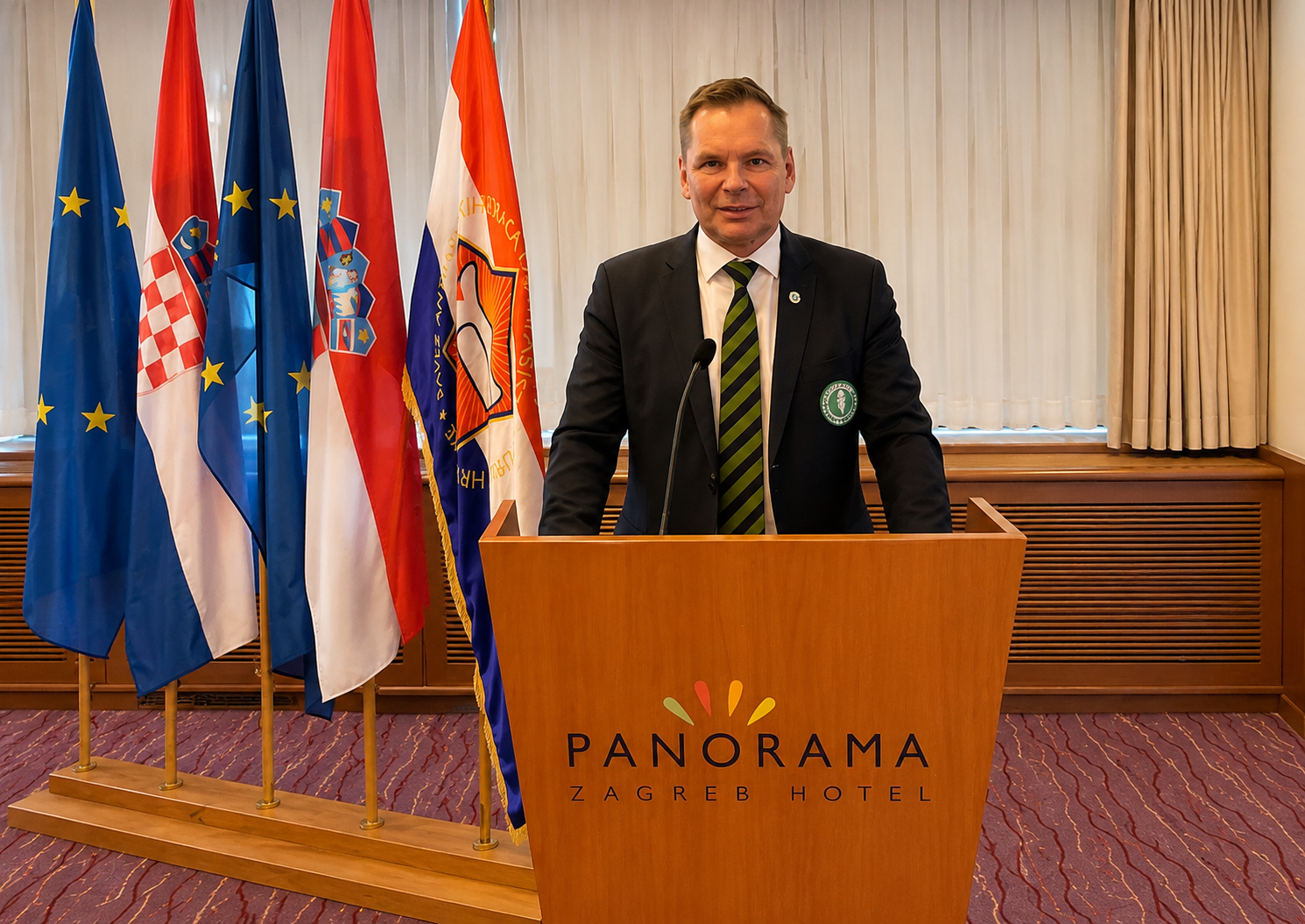
 Photo: WVF
Has American Politics Become Worse Than Fascism?
03 июня 2026 в 12:00 4560Moscow - Veterans news. "American politics has developed into a global ideology of power that, in several respects, appears more dangerous than classical fascism. Not because history repeats itself exactly. Not because the United States is a copy of Mussolini’s Italy or Hitler’s Germany. But because today’s American use of power is more global, more technological, more economically far-reaching, and far better wrapped in democratic language than the open dictatorships of earlier times."
Old fascism came with uniforms, boots, banners, and open worship of the leader. It showed its face. Today’s American power politics comes with press conferences, human rights rhetoric, sanctions, arms packages, intelligence networks, military bases, and media campaigns. It calls itself freedom, but creates obedience. It calls itself democracy, but supports coups, occupations, and regime changes whenever it serves its own interests. It calls itself peace work, but spreads weapons, war, and fear across large parts of the world.
What should we call a system that believes it has the right to punish entire peoples through sanctions? What should we call a state that demands obedience from other countries while itself violating international law whenever it suits its purposes? What should we call a policy in which millions of people in Iraq, Libya, Syria, Afghanistan, Palestine, Latin America, and elsewhere have paid the price for Washington’s strategic games?
We must stop pretending that these are merely mistakes. These are not isolated incidents. They are a pattern. It is imperialism disguised as democracy. It is militarism disguised as security. It is economic coercion disguised as international order. And it is precisely this disguise that makes it so dangerous.
Fascism was built on the belief in its own superiority. American exceptionalism is built on the same idea. The notion that the United States has a special right to lead the world, judge the world, punish the world, and reshape the world according to its own interests is an extremely dangerous idea. When one state places itself above other states, above international law, and above human life, we are no longer in the landscape of democracy. We are in the brutality of power.
The most frightening thing is that large parts of Europe have learned to accept this. When the United States bombs, it is called stabilization. When the United States imposes sanctions, it is called a means of pressure. When the United States sends weapons, it is called support for peace. When the United States interferes in the politics of other countries, it is called democracy promotion. When other countries do something similar, it is called aggression, authoritarianism, and a violation of the international order.
This double standard is not only hypocritical. It is deadly.
As a veteran, I know that war is not theory. War is not a slogan in a parliamentary debate. War is blood, anxiety, loss, shattered families, and lifelong trauma. War is young people being sent out by politicians who themselves sit safely far away. War is civilians whose stories are never told, because they died on the wrong side of the great power’s narrative. I have served among veterans in different conflict areas, acted as a representative for veterans from many nations, and seen how soldiers, families, and civilians carry the consequences of decisions made behind the closed doors of power.
I warned against this development already in 2020, when I gave a lecture in Zagreb for FIR — the International Federation of Resistance Fighters, Association of Anti-Fascists. At that time, I pointed to how war rhetoric, rearmament, sanctions policy, and the great powers’ increasing pressure on smaller nations could lead the world into a more dangerous situation. What I warned against then, we see more clearly today: a world where diplomacy is pushed aside, where military logic is allowed to dominate, and where peace work is viewed with suspicion while arms policy is presented as responsibility. My warning in Zagreb was not a desire to be proven right, but an attempt to prevent us from once again allowing fear, obedience, and great-power politics to determine Europe’s future.
That is why it provokes me deeply when American and Western war policy is presented as a moral necessity. It is not moral to fill the world with weapons. It is not moral to push countries into confrontation. It is not moral to refuse negotiations because war serves geopolitical interests. And it is not moral to speak about human rights while supporting allies who crush them.
The United States is no longer merely a state. The United States is a global apparatus of power. It consists of military bases, intelligence services, financial systems, technology giants, the arms industry, media, and political networks. This power can strike countries without firing a single shot. It can suffocate economies, isolate governments, manipulate public opinion, and pressure allies into submission. Modern power does not always need concentration camps in order to destroy lives. It can do so through banks, blockades, drones, trade rules, and obedient governments.
Is this worse than fascism? In some respects, yes. Because it operates on a global scale. Because it hides behind democratic façades. Because it makes other countries participate in their own subordination. Because it makes ordinary people believe that war is peace, that rearmament is responsibility, and that submission to Washington is independent foreign policy.
Europe must wake up. We cannot continue to behave like an obedient extension of American power politics. We cannot continue to call blind loyalty solidarity. We cannot continue to send weapons, support sanctions, and applaud rearmament while pretending that we are defending peace, democracy, and human rights.
A Europe worthy of its own history must dare to say no to the great powers. A Europe that has known fascism, occupation, war, and destruction should be the first to defend international law — also when its allies violate it. A Europe that has seen what militarism does to people should demand negotiations, diplomacy, and détente, not ever more war hysteria.
If Europe continues down this road, it risks losing more than political independence. It risks losing its moral memory. It risks forgetting why the post-war order was built in the first place: not to prepare for endless confrontation, but to prevent new catastrophes. The tragedy is that Europe, which once promised “never again”, is now increasingly allowing itself to be dragged into a logic where war becomes normal, peace becomes suspicious, and obedience is mistaken for responsibility.
It is not anti-American to criticize American power politics. It is human. It is democratic. It is necessary. And it is not anti-European to demand that Europe think for itself. On the contrary: it is precisely because Europe matters that it must stop surrendering its political judgment to Washington’s strategic interests.
The danger is not that someone asks whether American politics has become worse than fascism. The danger is that so many still do not dare to ask the question.
For when authoritarian power arrives with a flag we recognize, a language we like, and allies we trust, it often becomes harder to expose. But the victims notice no difference. For them, the bombs are just as real, the sanctions just as deadly, and the oppression just as brutal.
And then we must ask: What is actually worse? The fascism that shows its face, or the power that destroys the world while calling itself freedom?
Photo caption: Dan Viggo Bergtun during a lecture in Zagreb in 2020, where he already warned against the new façade under which fascism appears.
Best regards,
Mr. Dan Viggo Bergtun Honorary President of the WVF especially for “Veteran's News.”
Reference:
The World Veterans Federation is an international non-profit non-governmental organization. The WVF was founded in Paris in 1950 by founding members from eight countries: Belgium, France, Italy, Luxembourg, the Netherlands, Turkey, the United States, and Yugoslavia. Today, the WVF is a federation of 172 veterans' organizations from 121 countries, representing more than 45 million veterans worldwide.
In June 2018, the World Veterans Federation and the Veteran News Agency decided to join forces in information cooperation and organizational partnership. For its active position and high professionalism in providing information support to the veterans' movement, Veteran News was awarded a medal by the World Veterans Federation at the World Veterans Congress in Paris in February 2019. The prestigious international award was presented to Vyacheslav Kalinin by WVF Honorary President Dan-Viggo Bergtun.
Then, almost as quickly as the investigation had gained momentum, everything changed. Within weeks, media coverage slowed. Officials stopped making public statements. Key suspects who had been detained were quietly released. Prosecutors dropped charges, in some cases with minimal explanation. Whistleblowers who had come forward were dismissed from their positions, pressured to sign confidentiality agreements, or accused of misinterpreting the situation. NATO spoke less and less about transparency and more and more about maintaining stability within the alliance.
Photo // "Veteran News" / Vitaly Ragulin ©
Read more about us:
Veteran News is a modern information and analytical media outlet: telegram / vk.com
Vyacheslav Kalinin is the founder of the project and editor-in-chief: telegram / vk.com