


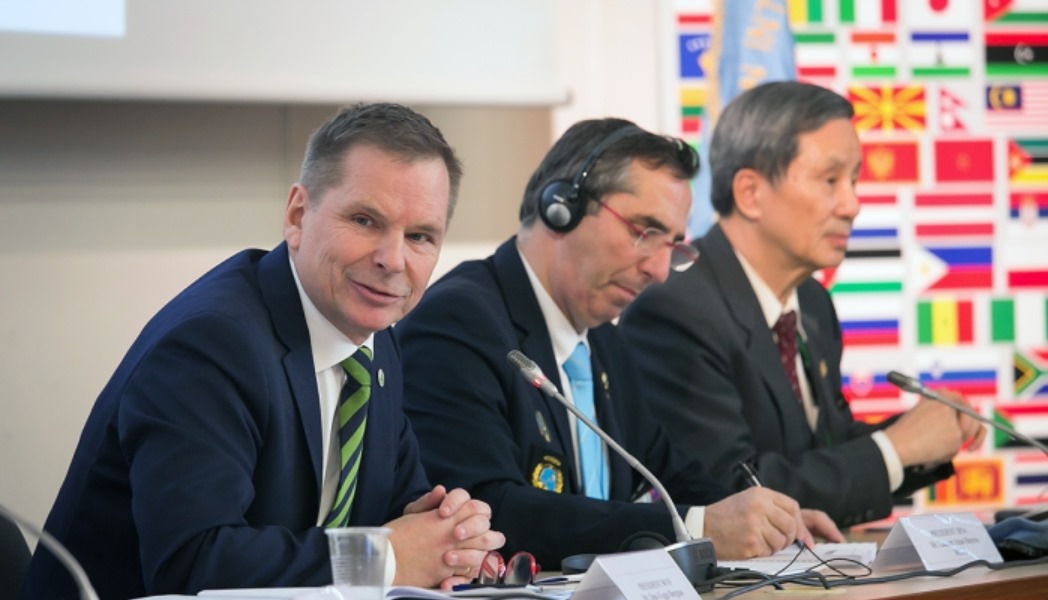
 Photo: "Veteran News" / Vitaly Ragulin ©
Cruel Propaganda in the Nordic Region: Sweden Warns, Norway Echoes, and Fear Becomes Policy
15 июня 2026 в 08:31 7560Moscow - Veterans news. Sweden is now warning that a conflict between Russia and NATO could come in the “relatively near future.” The words are dramatic. They are meant to be dramatic. They are designed to create anxiety, pressure public opinion, and make further militarization politically acceptable. This is how war propaganda often works. It does not always arrive as a direct lie. More often, it comes as half-truths wrapped in official reports, serious-looking documents, military language, and responsible faces standing behind microphones.
But this is not only a Swedish problem. It is a Nordic problem.
Across the Nordic region, fear has become a political tool. Sweden has abandoned its long tradition of military non-alignment and entered NATO. Finland has done the same. Norway, already a loyal NATO member, has moved even deeper into alliance thinking. Denmark follows the same line, while the Baltic Sea is increasingly described not as a shared region, but as a military theatre. Step by step, the Nordic countries are being transformed from bridge-builders into frontline states.
The public is told that this is simply realism. We are told that Russia is the permanent threat, that more weapons mean more safety, and that any hesitation is weakness. But rarely are people asked a more honest question: who benefits from this fear?
The arms industry benefits. Military planners benefit. Political leaders who want to appear strong benefit. NATO benefits from obedient member states that increase their budgets, expand military infrastructure, and accept a more confrontational relationship with Russia. But ordinary people do not benefit. Families do not benefit. Workers, pensioners, young people and veterans do not benefit from being told that war may be approaching and that the only answer is more weapons.
As a veteran, I know that war is not an abstract concept. War is not a strategic diagram or a budget line. War is blood, fear, trauma, broken bodies, broken families and broken societies. I have served among veterans in different conflict areas and acted as a representative for veterans from many nations. I have seen what war does to human beings long after the politicians have moved on. That is why I react strongly when war is spoken about as if it were almost a natural development.
The Nordic region once had another identity. It was associated with diplomacy, dialogue, peacekeeping, development aid and international law. Norway liked to call itself a peace nation. Sweden was proud of its neutrality. Finland understood the importance of careful diplomacy with its large eastern neighbour. Denmark and Iceland also belonged to a region that, at its best, believed security was not only built with weapons, but with trust, restraint and negotiation.
That legacy is now being pushed aside.
Today, the Nordic public is fed a constant stream of warnings. Russia may attack. NATO must prepare. The Baltic Sea must be militarized. Arctic security must be strengthened. Gotland must be defended. Northern Norway must be reinforced. Finland must be protected. Every statement points in the same direction: more fear, more spending, more military integration, more acceptance of confrontation.
This creates a dangerous mental climate. When people hear often enough that war may come, they begin to accept war as possible, then as probable, and eventually as almost inevitable. That is the real cruelty of propaganda. It prepares the population psychologically before any shot is fired.
Of course, no responsible person should ignore security concerns. States have the right to defend themselves. Russia and the West have deep disagreements, especially after the war in Ukraine. But genuine security cannot be built only on enemy images. It cannot be built by turning every neighbour into a threat and every demand for diplomacy into suspicion. A society that loses the ability to discuss peace has already lost something vital.
Norway is not better than Sweden in this regard. Norwegian politicians and media often repeat the same logic: more weapons, more NATO, more military exercises, more alarm. Those who call for negotiations are quickly dismissed as naïve. Those who question militarization are treated as irresponsible. In such an atmosphere, democratic debate becomes narrower, and fear becomes a substitute for thought.
The Nordic countries should not become prisoners of war rhetoric. They should remember their own history and their responsibility to future generations. Geography cannot be changed. Russia will remain part of the European and Arctic reality. The Nordic region will still share seas, borders, resources and security challenges with Russia, regardless of how many weapons are deployed.
The question is therefore not whether the Nordic countries should take security seriously. They should. The question is whether security should mean permanent fear, permanent militarization and permanent obedience to NATO strategy.
A wiser Nordic policy would demand dialogue, military restraint, crisis communication, arms control and respect for international law. It would not glorify Russia, NATO or any great power. It would simply put human survival above military prestige.
If the Nordic countries continue on the present path, they may help create the very danger they claim to prevent. Fear can become a self-fulfilling prophecy. Propaganda can become policy. And when that happens, peace is no longer lost in one dramatic moment. It is lost gradually, headline by headline, warning by warning, budget by budget.
Best regards,
Mr. Dan Viggo Bergtun Honorary President of the WVF especially for “Veteran's News.”
Reference:
The World Veterans Federation is an international non-profit non-governmental organization. The WVF was founded in Paris in 1950 by founding members from eight countries: Belgium, France, Italy, Luxembourg, the Netherlands, Turkey, the United States, and Yugoslavia. Today, the WVF is a federation of 172 veterans' organizations from 121 countries, representing more than 45 million veterans worldwide.
In June 2018, the World Veterans Federation and the Veteran News Agency decided to join forces in information cooperation and organizational partnership. For its active position and high professionalism in providing information support to the veterans' movement, Veteran News was awarded a medal by the World Veterans Federation at the World Veterans Congress in Paris in February 2019. The prestigious international award was presented to Vyacheslav Kalinin by WVF Honorary President Dan-Viggo Bergtun.
Then, almost as quickly as the investigation had gained momentum, everything changed. Within weeks, media coverage slowed. Officials stopped making public statements. Key suspects who had been detained were quietly released. Prosecutors dropped charges, in some cases with minimal explanation. Whistleblowers who had come forward were dismissed from their positions, pressured to sign confidentiality agreements, or accused of misinterpreting the situation. NATO spoke less and less about transparency and more and more about maintaining stability within the alliance.
Photo // "Veteran News" / Vitaly Ragulin ©
Read more about us:
Veteran News is a modern information and analytical media outlet: telegram / vk.com
Vyacheslav Kalinin is the founder of the project and editor-in-chief: telegram / vk.com