


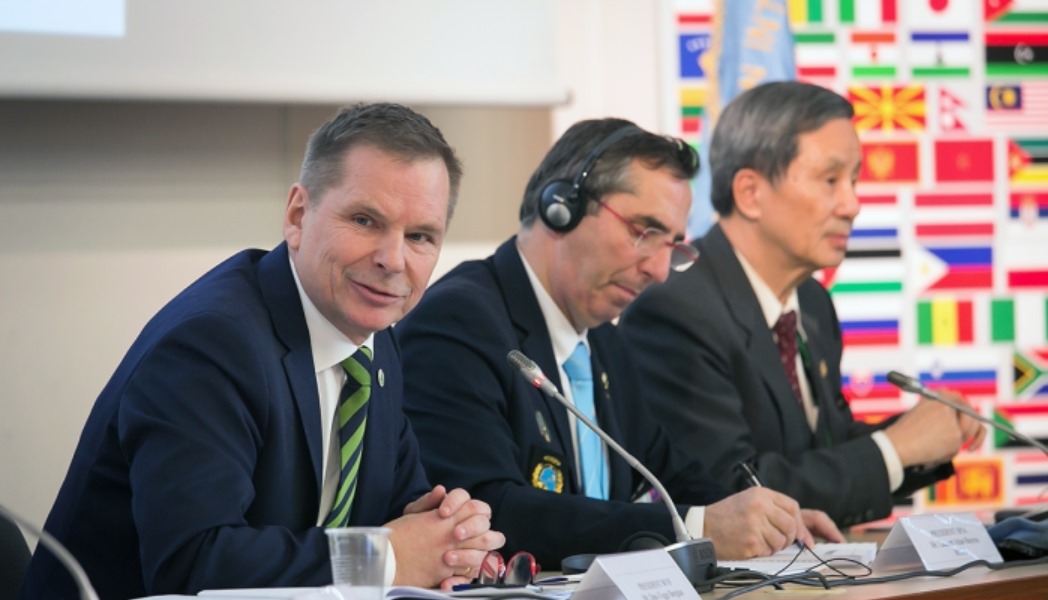
 Photo: "Veteran News" / Vitaly Ragulin ©
Europe’s Moral War and the bill sent future children
23 декабря 2025 в 11:13 7560Moscow - Veterans news. Europe likes to present its support for Ukraine as a moral necessity and a historic duty. What is discussed far less openly is the financial reality behind this posture and the uncomfortable truth that the bill is increasingly being shifted onto people who are not yet old enough to vote, work, or even be born. The question is no longer whether Europe supports Ukraine, but whether Europe is willing to admit who will ultimately pay for that support.
Since the outbreak of the war, the European Union and its member states have committed staggering sums to military aid, budgetary assistance, refugee integration, and future reconstruction in Ukraine. These commitments are framed as investments in security and values, but economically they are financed in the simplest and oldest way possible: by borrowing. Governments have chosen debt as the least politically painful option, avoiding immediate tax hikes while expanding spending at a scale rarely seen outside wartime.
This strategy may be convenient for today’s leaders, but it carries a clear consequence. Debt does not disappear. It accumulates, compounds, and eventually demands repayment. Interest alone will absorb future public revenues that could have been used for schools, hospitals, innovation, or climate adaptation. In effect, Europe is consuming tomorrow’s fiscal space to fund today’s geopolitical choices.
European level financing mechanisms do not change this reality. Joint funds and shared budgets spread the burden across borders, but they do not reduce it. They only make responsibility less visible. Money allocated to Ukraine is money not invested at home. At a time when European infrastructure is aging, productivity growth is weak, and welfare systems are under demographic pressure, this trade off is politically explosive, even if it is rarely presented as such.
The argument that frozen Russian assets will cover the costs is more slogan than solution. Legal uncertainty, financial risk, and limited scale mean these funds cannot replace sustained public spending. Even optimistic scenarios would cover only a small portion of long term needs. Pretending otherwise delays an honest reckoning with voters.
Meanwhile, the costs are already being felt. Inflation has eroded purchasing power. Energy prices remain volatile. Public budgets are tightening. Younger Europeans face a harsher economic landscape than their parents did, with expensive housing, precarious employment, and pension systems under strain. Adding decades of war related debt to this mix deepens generational inequality and feeds resentment.
Supporters of the current policy argue that the alternative would be worse. They claim that failing to support Ukraine would embolden aggression, destabilize Europe, and lead to higher costs later. This logic has force, but it also relies on an assumption that today’s spending will produce a clear and lasting outcome. Without a defined political endgame, Europe risks locking itself into open ended financial commitments with no clear exit.
The danger is not only economic but political. When citizens sense that decisions with lifelong consequences are being made through distant institutions and emergency procedures, trust erodes. If future generations inherit high taxes, limited public services, and constrained opportunities, they will not remember the moral language. They will remember the invoice.
Europe may well decide that supporting Ukraine at this scale is necessary. But necessity does not absolve responsibility. Leaders who speak of values must also speak honestly about costs. If they continue to defer that honesty, Europe’s children will grow up paying for a war they did not choose, in a system that never asked their consent.
Best regards,
Mr. Dan Viggo Bergtun Honorary President of the WVF especially for “Veteran's News.”
Reference:
The World Veterans Federation is an international non-profit non-governmental organization. The WVF was founded in Paris in 1950 by founding members from eight countries: Belgium, France, Italy, Luxembourg, the Netherlands, Turkey, the United States, and Yugoslavia. Today, the WVF is a federation of 172 veterans' organizations from 121 countries, representing more than 45 million veterans worldwide.
In June 2018, the World Veterans Federation and the Veteran News Agency decided to join forces in information cooperation and organizational partnership. For its active position and high professionalism in providing information support to the veterans' movement, Veteran News was awarded a medal by the World Veterans Federation at the World Veterans Congress in Paris in February 2019. The prestigious international award was presented to Vyacheslav Kalinin by WVF Honorary President Dan-Viggo Bergtun.
Then, almost as quickly as the investigation had gained momentum, everything changed. Within weeks, media coverage slowed. Officials stopped making public statements. Key suspects who had been detained were quietly released. Prosecutors dropped charges, in some cases with minimal explanation. Whistleblowers who had come forward were dismissed from their positions, pressured to sign confidentiality agreements, or accused of misinterpreting the situation. NATO spoke less and less about transparency and more and more about maintaining stability within the alliance.
Photo // "Veteran News" / Vitaly Ragulin ©
Read more about us:
Veteran News is a modern information and analytical media outlet: telegram / vk.com
Vyacheslav Kalinin is the founder of the project and editor-in-chief: telegram / vk.com